
Primapria · Label & Quality Guide
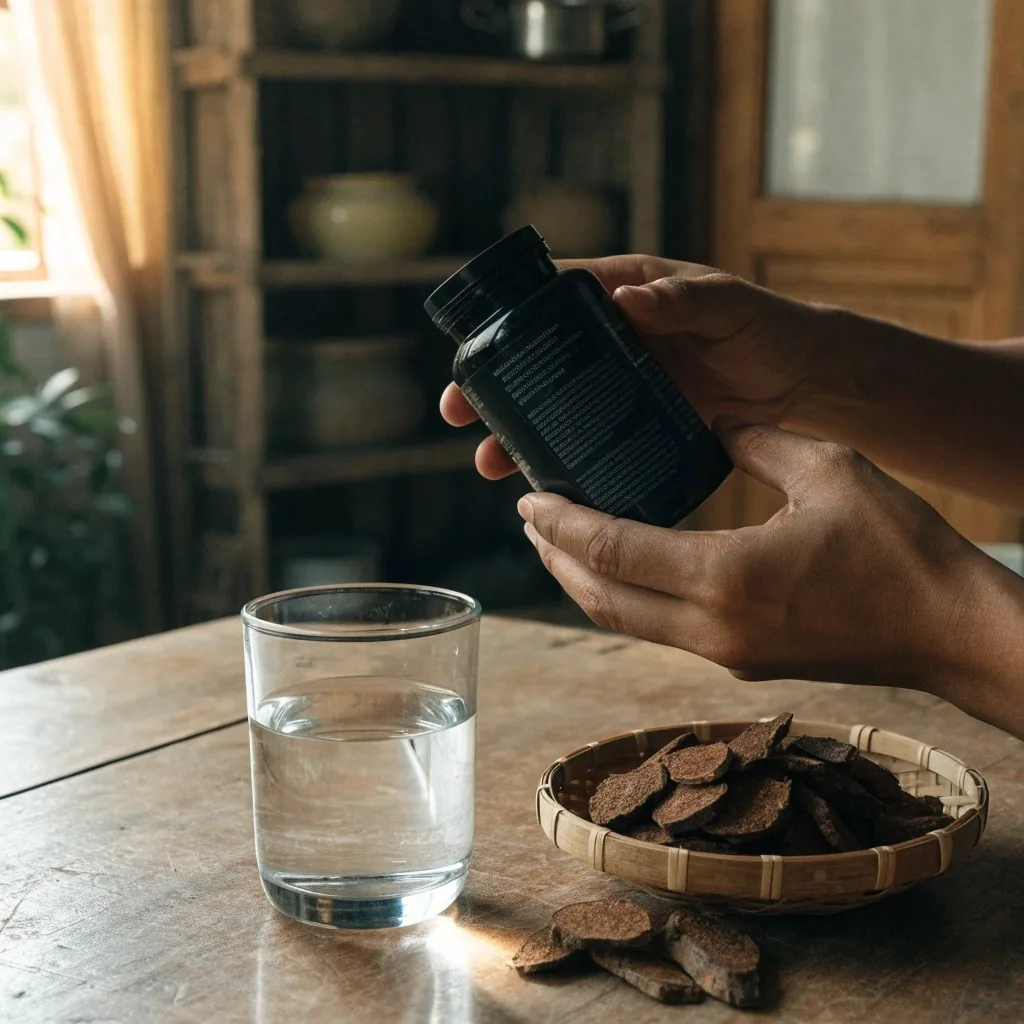
Reading the back panel
How to Read a Men’s Vitamin Label Before You Buy
The front of a supplement bottle is advertising. The back is the product. This guide is about the back: what a serving size really means, how to spot undisclosed amounts, what label BPOM does and does not tell you, and how to judge whether a men’s vitamin formula is presented clearly enough to evaluate.
The four things worth finding on any panel
Every product in this category asks you to trust a label. Some labels earn it. Four items settle most of the question, and they take about two minutes to work through.
-
Serving size
How much counts as one dose, and how many servings the container actually holds. Everything else on the panel is measured against this number.
-
Amounts per ingredient
A milligram figure next to each name, rather than one collective weight shared by a group.
-
Registration
Whether the product carries label BPOM registration, which confirms the listing exists and has been reviewed.
-
Wording
Does the label describe nutritional or botanical support, or does it drift into medical territory it cannot back up?
Start with the serving size, not the ingredient list
Serving size is the first thing to find and the thing most people skip. It tells you how much of the product counts as one dose, and it determines how long the bottle actually lasts. If a 60-tablet bottle lists two tablets per serving, you are holding a one-month supply.
Only after you know the serving size does the ingredient panel mean anything. Amounts are listed per serving, not per tablet. A formula that looks generous at a glance can halve once you account for a two-tablet dose. This is not a trick by default, but it is the most common source of confusion in the category.
It also changes how you compare two bottles with different counts. A 100-tablet product at one tablet per serving is not automatically a better buy than a 60-tablet product at two tablets per serving. Divide the count by the serving size before you look at anything else.
How the two readings differ on the same bottle
What the front implies
- Broad, list-like wording with no figures
- A single tablet count that reads like a duration
- Ingredient names borrowed for recognition
What the back settles
- The serving size, in tablets or scoops
- Servings per container, and the real duration
- A milligram amount against each ingredient
A quick note on wording: pills that describe nutritional or botanical support, rather than medical claims, are the ones you can actually get information from. That distinction carries through every section below.
Per-ingredient amounts vs. proprietary blends
A transparent label lists a milligram amount next to each ingredient. A vague label groups several ingredients under one collective weight, usually with a name like “proprietary blend” or “herbal complex,” and gives a single number for the group.
Goes on the shortlist
Amounts beside each name
Every ingredient carries its own figure. You can see which one leads the formula and which one is a supporting amount.
Set aside for now
One weight for the whole group
Eight extracts, one total. You cannot tell whether the first is a real contributor or a rounding error.
That single number tells you almost nothing. Use disclosure as a hard filter rather than a preference, because a blend you cannot break apart cannot be compared to anything you already take. Formulas that disclose per-ingredient amounts go on the shortlist. Formulas that do not, do not.
One practical test: pick the ingredient you actually care about and try to find a number for it. If the answer is somewhere inside a group weight, the label has answered a different question.
What label BPOM means here
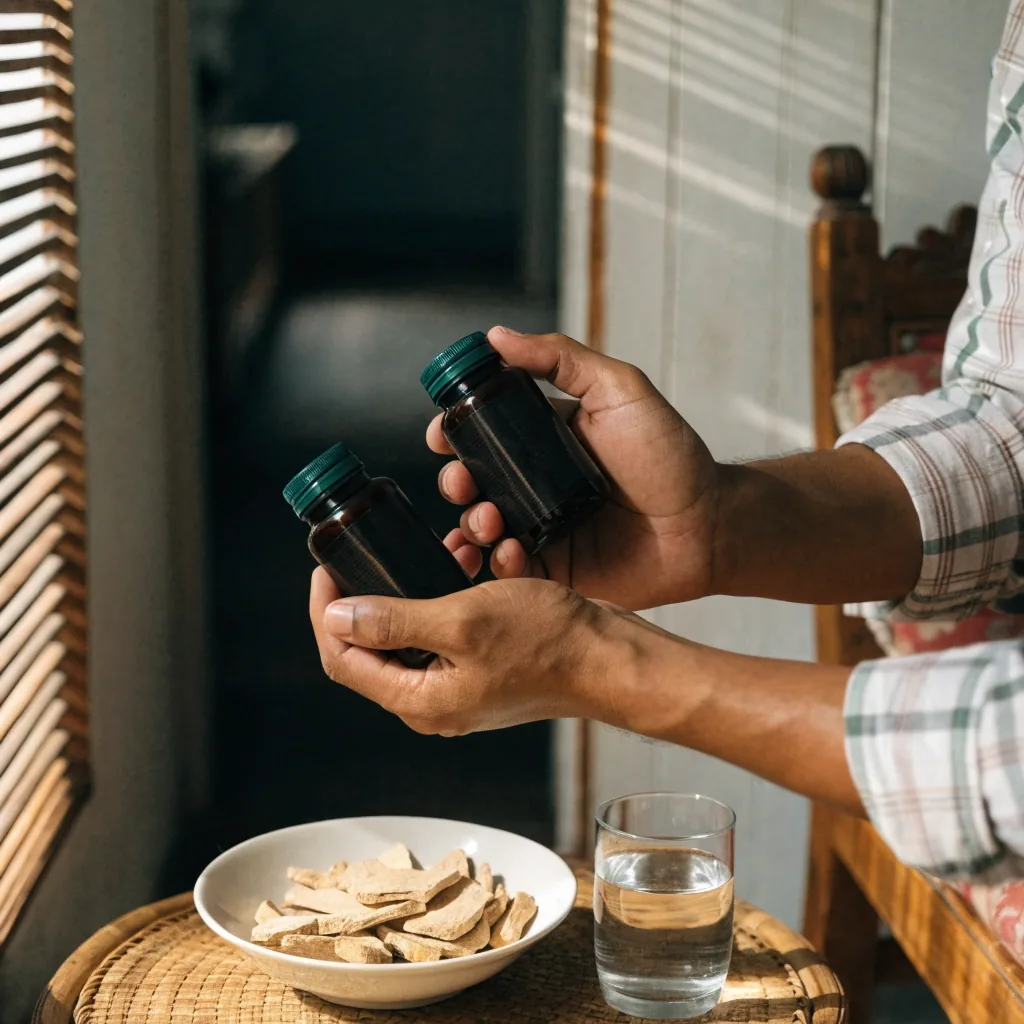
In Indonesia, label BPOM is the registration marker to check before buying a supplement. It indicates the product is registered and that its labeling has been through a review process. It is a real and useful signal, and it is also a floor, not a ranking.
Registration does not mean a formula suits your routine, and it does not mean the amounts are generous. A registered product with a vague panel is still a vague panel. Use BPOM as the entry check, then judge the formula itself on disclosure and serving size.
Where registration sits in the decision
- Confirms The product is registered and its labeling has been reviewed.
- Does not Rank quality, or tell you whether the amounts suit your routine.
- Next step Read the serving size and the ingredient amounts on the panel itself.
You can usually find the registration wording on the back panel or in the marketplace listing’s product images. If it appears nowhere, treat that as an answer too.
Extract names, ratios, and standardization
“Root powder” and “root extract” are not the same thing, and the difference usually hides in three or four words on the panel.
Root powder
The dried plant, ground. No stated minimum of any marker compound, so two powders of the same plant can differ.
Read it as a starting material, not a measured dose.
Standardized extract
The maker promises a minimum level of a named marker compound, which is more specific than an unspecified extract.
More specific wording. Still check the total amount per serving.
A stated ratio, such as 10:1
Describes concentration of raw material to finished extract. It says nothing about the extraction method or the final dose in the capsule.
A ratio is not a dose. Find the milligrams.
You do not need to master extract chemistry. You need to notice when a label is specific and when it is borrowing a familiar ingredient name for the front of the bottle. Specific labels are not automatically better, but they are the only ones you can compare against anything.
Vitamin B complex and the blend trap
Vitamin B complex is explicitly listed in many Indonesian men’s vitamin descriptions, and it sits alongside zinc, magnesium, vitamin D, and omega-3 in broad formulas. The problem is that “B complex” is a category, not a fixed amount. Two products can both list it while carrying very different totals.
The fix is to look for individual B vitamins, such as B6, B12, or folate, listed with their own amounts. If the panel only says “B complex” as a single line, you are being told the category rather than the content. That is a transparency note worth recording in your comparison.
Browse the ingredient guide
Format details that affect the label
Capsules, tablets, softgels, and powders carry labeling consequences. The format usually decides what the serving line says and how easy the panel is to use.
Tablets
Hold larger mineral loads, which is why broad men’s multivitamins often come as tablets in 60 or 100 counts. The serving is often two tablets.
Capsules
Keep the formula compact, which suits botanical extracts and single-ingredient products. Serving lines tend to read cleanly.
Softgels
Suit oils such as omega-3, where the label may also describe the softgel itself rather than only what is inside it.
Powders
List a scoop as the serving, and the scoop is frequently the only measuring tool provided. If the serving is unclear, the whole panel becomes hard to use.
Format and labeling are linked, so read them together. A clear serving line is usually the sign of a label that was written to be read rather than looked at.
A four-point checklist
Run these in order. The sequence matters, because the last two only make sense once you have the first two.
Once a formula passes all four, the comparison work gets much shorter.
-
1
Serving size and servings per container
Two numbers that tell you the dose and how long the bottle lasts.
-
2
Per-ingredient amounts, not a grouped blend
If eight extracts share one weight, the panel has not told you enough to compare.
-
3
Label BPOM registration
The entry check. Registered and reviewed, but not a ranking of quality.
-
4
Support wording rather than medical claims
Labels that stay in their lane tend to be clearer overall. Labels that drift into medical territory usually have less to say about what is actually inside.
Where to check before you buy
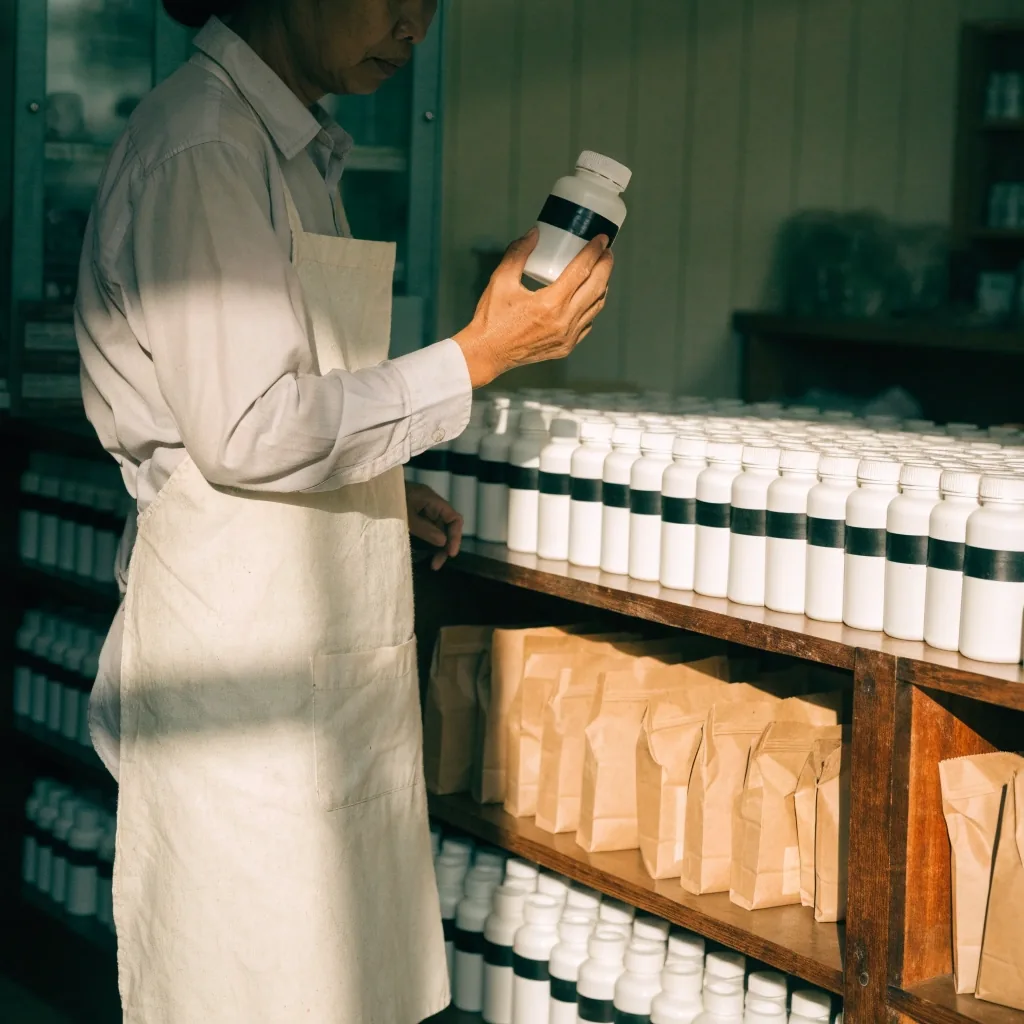
Marketplace listings often show only the front of the bottle and a promotional banner. Ask for the back, or find the panel in the product images. If the seller never shows the ingredient amounts anywhere, that absence is your answer.
For products sold through authorized retail channels, the panel is usually visible on the listing itself. That is one practical advantage of buying through established retail rather than an unknown reseller. Either way, the checklist is the same, and it takes about two minutes per product.
Questions that come up most
Short answers to the three things readers ask after working through the checklist. If your question is about a specific product on our shortlist, the contact page is the faster route.
Is BPOM registration enough to trust a supplement?
It confirms the product is registered and its labeling has been reviewed. It does not rank quality or guarantee the formula suits you. Treat it as the entry check, then evaluate serving size and per-ingredient amounts on the panel.
What is a proprietary blend and should I avoid it?
It is a group of ingredients listed under one total weight instead of individual amounts. You cannot judge what is inside, so for comparison purposes it functions as a limitation. Formulas that disclose per-ingredient amounts are easier to evaluate.
Why does “B complex” appear without individual amounts?
Because it is a category name, not a fixed dose. Some labels break out B6, B12, and folate individually, which is more informative. When the panel lists only “B complex” as one line, you are seeing the category rather than the content.
Two minutes per product is the whole method
Reading the back panel before you buy is the difference between choosing a formula you understand and choosing one you hope works. Nothing here replaces a conversation with a qualified professional about your own routine and circumstances.
Keep the four points with you: serving size, per-ingredient amounts, registration, and wording. They carry across men’s vitamin formulas, natural capsules for strength and vitality, and the broader range of healthy lifestyle products sold in Indonesia.
Comparison
Compare products that disclose amounts
Side-by-side listings built around the figures you just learned to look for.
Product ComparisonIngredients
Browse the ingredient guide
What tongkat ali, maca root, ashwagandha, and the B vitamins are doing in a formula.
Ingredient GuideRoutine
Plan your daily routine
How serving size and timing turn into a schedule you can actually keep.
Daily Routine & EnergyQuestions
Ask about a label you are unsure of
Send us the panel and we will walk through it with the same checklist.
Contact Primapria